
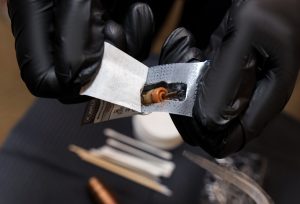
 When our guests come to us for their first tattoo, they often want to know how safe the tattooing process is: whether it is possible to catch an infection, bring something into the skin, and whether the session poses any health risks. These concerns mostly come from the past, when tattoos were done almost underground: one needle could be used on many people, and “disinfection” often meant wiping that needle with alcohol—if it was done at all. Today everything is different, and if a studio properly follows cleanliness, sterility, and disinfection standards, the risk of anything entering the body besides pigment is reduced to zero.
In fact, following all of these standards is the most important criterion when choosing a place to get a tattoo, because your health directly depends on it. In professional tattoo studios, cleanliness receives the same serious attention as the artistic part of the session. In this article, we have gathered everything you need to know about hygiene standards during tattooing, so you know what to pay attention to and when to raise the alarm if something listed below is not being followed.
1. Disposable gloves
The artist must work in disposable gloves, which must be replaced every time they come into contact with non-sterile objects (for example, when the artist leaves for a break or touches something that is not prepared for the tattooing process).
2. Skin disinfection
The artist must disinfect your skin with an antiseptic at the beginning of the session.
3. Disposable materials
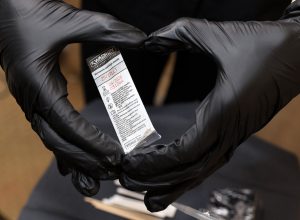
Everything that comes into contact with the fresh wound must be disposable: needles, cartridges, pigment caps, etc. Before the session, all of these are stored in sterile packaging and opened in front of you so you can be sure the materials are untouched. After the session, they cannot be reused and are disposed of.
4. Sterile reusable materials
Parts of the tattoo machine that are not disposable and are used near the tattooed area (for example, grips) must be sterilized after each session and stored in sterile packaging until the next use. First, pre-sterilization cleaning is carried out by soaking the parts in a special solution. Then full sterilization is performed using special equipment: autoclaves, dry-heat sterilizers, or UV sterilizers. In our studio, a dry-heat sterilizer is used. Its principle of operation is based on high temperatures that destroy all types of bacteria, making the tool completely sterile.
5. Barrier protection
Everything that is not disposable and does not directly contact the tattooing area (other parts of the tattoo machine, table, couch, etc.) must be disinfected and covered with disposable barrier protection (plastic covers, sheets, film), which is also discarded after the session.
 6. Pigment in disposable caps
The pigment used for tattooing is poured into disposable caps. At the end of the session, regardless of how much pigment remains inside, the caps are disposed of.
7. Studio cleanliness
The artist’s workspace must be cleaned and disinfected every day, and all work surfaces must be wiped with special chemical disinfectants.
Conclusion
This impressive list of cleanliness requirements leaves infections and bacteria no chance. Remember:
— You can always ask the artist to explain how they disinfect the room and sterilize their tools. An honest tattoo artist will never avoid this question and will gladly explain and show everything. And on the contrary: if the artist avoids giving a clear answer, this should be a warning sign.
— You always have the right to refuse the service if the cleanliness of the workspace or tools raises any doubts.
— After you leave the studio, the safety of your tattoo becomes your responsibility: the fresh wound can still be exposed to infection, so never neglect proper aftercare.
 FAQ — Tattoo Safety & Sterility
1. Can I get an infection during a tattoo session?
If a studio follows proper hygiene and sterility standards, the risk of infection is extremely low. Most issues arise only if the studio ignores basic safety rules or if aftercare is neglected.
2. Should I ask the artist to show how tools are sterilized?
Yes. A professional tattoo artist will never avoid this question. They will gladly explain and show their sterilization process.
3. Are all tattoo needles and cartridges single-use?
Yes. Anything that touches the skin must be disposable and opened in front of the client.
4. How do I know if the studio is clean enough?
Pay attention to:
– fresh disposable gloves
– skin disinfection
– sealed packaging
– barrier protection
– covered equipment
– general cleanliness of the room
If something looks suspicious, trust your instincts.
5. Can reusable tools be safe?
Yes, if properly sterilized. Items like metal grips must go through a full sterilization cycle (pre-cleaning, soaking, and dry-heat or autoclave sterilization).
6. Do I need to worry after I leave the studio?
Yes. A fresh tattoo is still an open wound. Proper aftercare prevents infection and ensures healthy healing.
7. What should I do if I feel the studio is not clean?
You have the right to refuse the service at any moment. Your health is more important than the appointment.